Buying a Home With No Money Down
Feb 24, 2026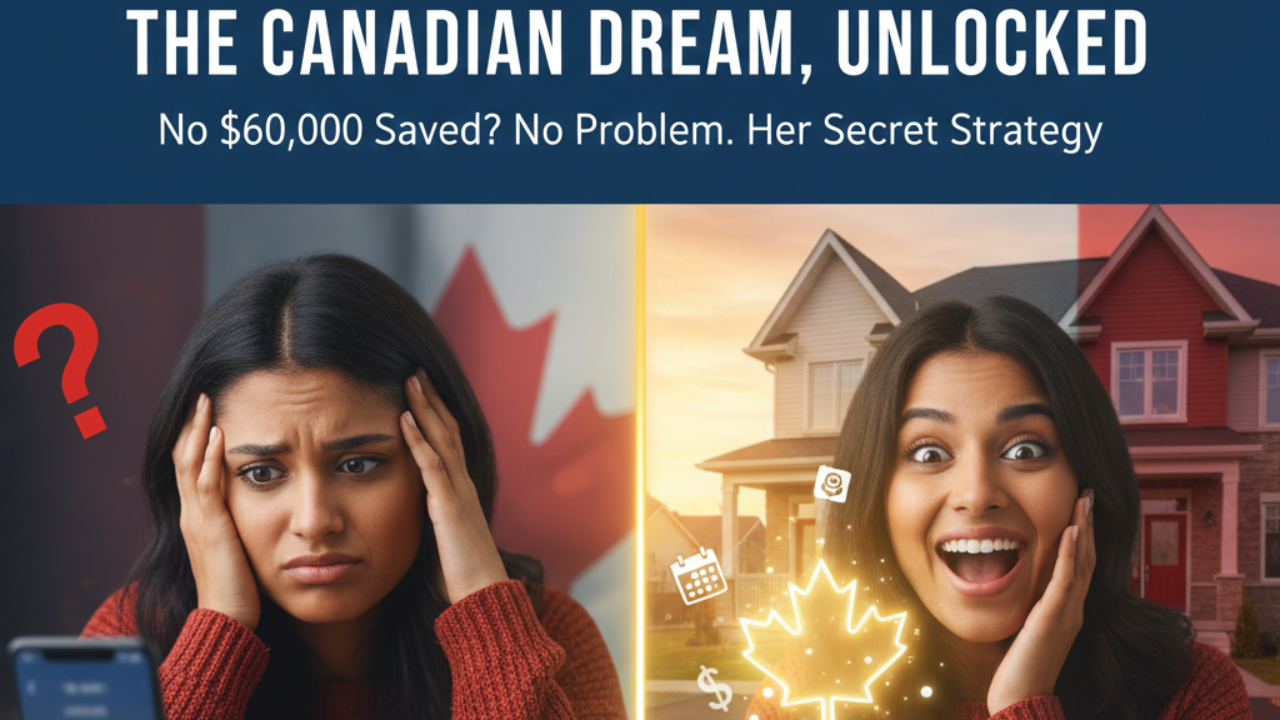
Buying a home with no money down
The Canadian Zero-Down Strategy: How to Buy Without a 20% "Nest Egg"
The 20% down payment is no longer the entry fee for homeownership in Canada. While the "Zero Down" mortgages of the early 2000s are gone, savvy buyers are using capital preservation strategies to enter the market with little to no personal savings.
Buying with no money down isn't a "last resort"—it is a tactical maneuver used to preserve liquidity for emergency funds or home improvements.
1. The "Borrowed Down Payment" Strategy
Since CMHC-insured mortgages require at least 5% down, many Canadians use what is known as a Flex Down mortgage.
Instead of using personal savings, you can use a "non-traditional" source for your 5% down payment, such as:
-
A Personal Line of Credit: If your income is high and your Debt-to-Income (DTI) ratio is low, you can borrow the down payment.
-
RRSP Home Buyers’ Plan (HBP): In 2026, you can withdraw up to $60,000 tax-free from your RRSP.
-
Family Gifts: A non-repayable gift from a family member is a common way to reach the 5% threshold without draining your own bank account.
While there is no direct federal "USDA" equivalent in Canada, various provinces have launched pilot programs to bridge the gap.
For example, as of February 2026, Nova Scotia has introduced a First-time Homebuyers Program that reduces the required down payment to just 2%, with the province acting as a guarantor.
To pull off a no-money-down deal in Canada, your credit score is your most valuable asset.
Additionally, all buyers must pass the Mortgage Stress Test.
"No money down" does not mean "no money needed." In Canada, you must prove you have at least 1.5% of the purchase price available in cash to cover closing costs.
Even with 100% financing, you must account for:
-
Land Transfer Tax: This varies by province (and is doubled in Toronto).
-
Legal Fees: Usually $1,000 to $2,000.
-
PST on CMHC Insurance: While the insurance premium itself is added to your mortgage, provinces like Ontario, Quebec, and Saskatchewan charge PST on that premium, which must be paid in cash at closing.
Professional Strategy: We often look for Seller Cash-Back or concessions. While less common in Canada than in the US, in a balanced 2026 market, we can negotiate for the seller to cover certain "adjustments" or repairs, reducing the cash you need on closing day.
5. Professional Pre-Flight Advice
The first step for any Canadian buyer seeking a zero-down option is to initiate a pre-approval with a local broker who understands "Flex Down" lenders. Before exploring
Next Steps for Your Purchase
The 2026 Canadian market rewards the prepared. To see which programs you qualify for, you can check out our latest
Want deeper answers, expert tips, and a place to ask anything?
Come inside Olyveco's Community — your safe space to learn and plan.
Stay connected with news and updates!
Join our mailing list to receive the latest news and updates from our team. Don't worry, your information will not be shared.
We hate SPAM. We will NEVER sell your information, for any reason.